


The Association LMS Buyer's Guide
How to Choose The Right Learning Management System for Your Association to Drive Engagement, Revenue, and Long-Term Member Value

Executive Summary
Continuing education and professional development are some of the most powerful tools associations have to drive engagement, retention, and non-dues revenue. But as member expectations change and education programs grow more complex, many associations find their current processes and tools can’t keep up.
In 2026, members expect learning experiences that are flexible, relevant, and connected to real-world challenges. They don’t just want courses; they want context, conversation, and community. At the same time, association teams are under pressure to increase non-dues revenue, improve engagement, and do more with limited staff resources.
That’s why choosing the right learning management system (LMS) has become one of the most important technology decisions an association can make.
This guide is designed to help association professionals evaluate LMS platforms through a modern lens—one that goes beyond course delivery and focuses on long-term member value, scalability, and connected learning. You’ll learn what to look for in an LMS vendor, how to evaluate the learner and staff experience, and why integration with community and other core systems is no longer optional.
Throughout this guide, we’ll explore how a purpose-built association LMS—like Higher Logic Thrive Learn powered by Momentive—supports continuous learning, strengthens engagement, and turns education into a driver of retention and revenue.
Who This LMS Buyer’s Guide is For
As you move through this guide, think about your current learning programs, internal capacity, and long-term goals. Each section is designed to help you evaluate LMS options through both a strategic and practical lens.

This Guide Is Designed for Associations That:
- Offer continuing education, certificates, or credentialing programs
- Want to grow non-dues revenue through education
- Are managing learning across disconnected systems
- Need tighter integration between learning, membership, and community
- Are outgrowing spreadsheets or generic LMS tools

What You’ll Learn in This Guide:
- What an LMS should do for associations
- Which features matter most during evaluation
- How to compare LMS options effectively
- How to prepare for internal approval and implementation
- How to move from evaluation to implementation with confidence
The State of Association Learning in 2026
Association learning has changed—and member expectations have changed with it.
Members no longer rely on a single source for professional development. They learn from peers, short-form content, on-demand videos, live experiences, and real-world application. Associations that continue to treat learning as a static catalog of courses risk losing relevance.
Today’s learning strategies must support:
- Continuous, career-long education
- Multiple learning formats
- Peer-to-peer knowledge sharing
- Clear value tied to membership
Education is no longer just a benefit. It’s a retention strategy, a revenue driver, and a competitive differentiator.
To support this shift, associations need technology that enables learning to evolve—without adding complexity for staff or friction for members.
What Does Modern Learning Look Like for Associations?
Modern association learning is not linear. Members don’t simply register for a course, complete it, and move on.
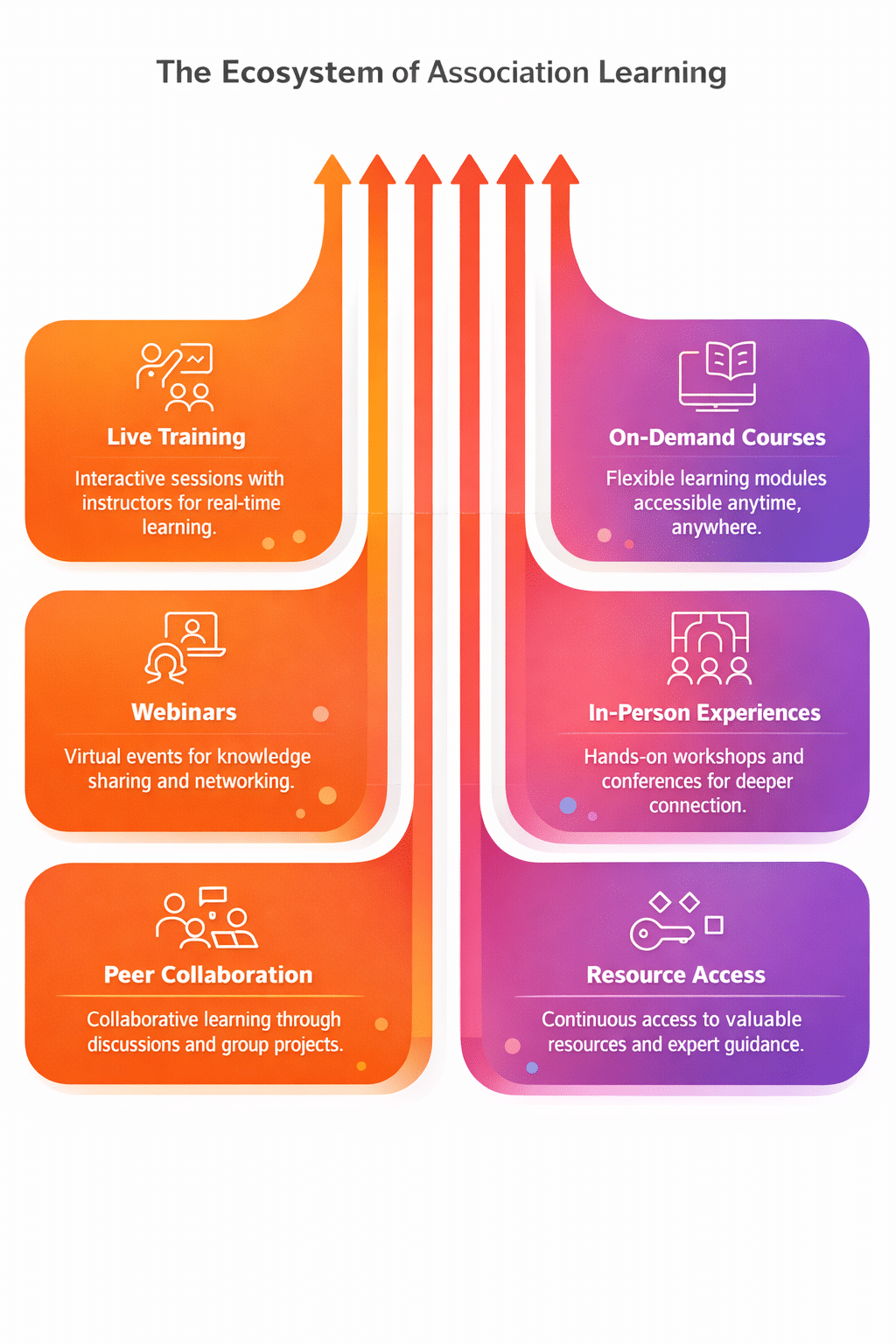
Instead, learning happens across an ecosystem that includes:
- Live instructor-led training
- On-demand courses and microlearning
- Webinars and virtual events
- In-person experiences
- Peer discussion and collaboration
- Ongoing access to resources and experts
The most successful associations design learning experiences that meet members where they are and allow them to engage at their own pace.
This approach supports:
- Lifelong learning journeys
- Greater adoption of education offerings
- Stronger engagement beyond the classroom
- Deeper connection to the association’s mission
Why Associations Re-Evaluate Their Learning Management
Many associations don’t start with a long-term learning software strategy—they add tools as needs arise. Over time, that often leads to inefficiencies, poor learner experiences, and missed revenue opportunities.
Do any of these common challenges sound familiar?
- Time-consuming manual course and credential tracking
- Disconnected AMS, LMS, and community platforms
- Limited visibility into learner engagement and outcomes
- Difficulty scaling programs without adding staff workload
On top of this, even if your organization has an LMS, many legacy LMS platforms are designed for corporate training—not member-based education. As a result, associations often encounter:
- Limited support for member vs. non-member pricing
- Rigid course and credential structures
- Poor integration with association technology stacks
- Learner experiences that feel disconnected from the broader member journey
Common challenges without a modern LMS >
What Is an Association LMS?
So how do you find an LMS that’s right for your association? What does it look like for your LMS to truly support a modern learning experience?
At its core, an LMS helps organizations create, deliver, and track online learning. But an association LMS goes further—supporting education as a strategic driver of engagement and revenue.
Core LMS Capabilities
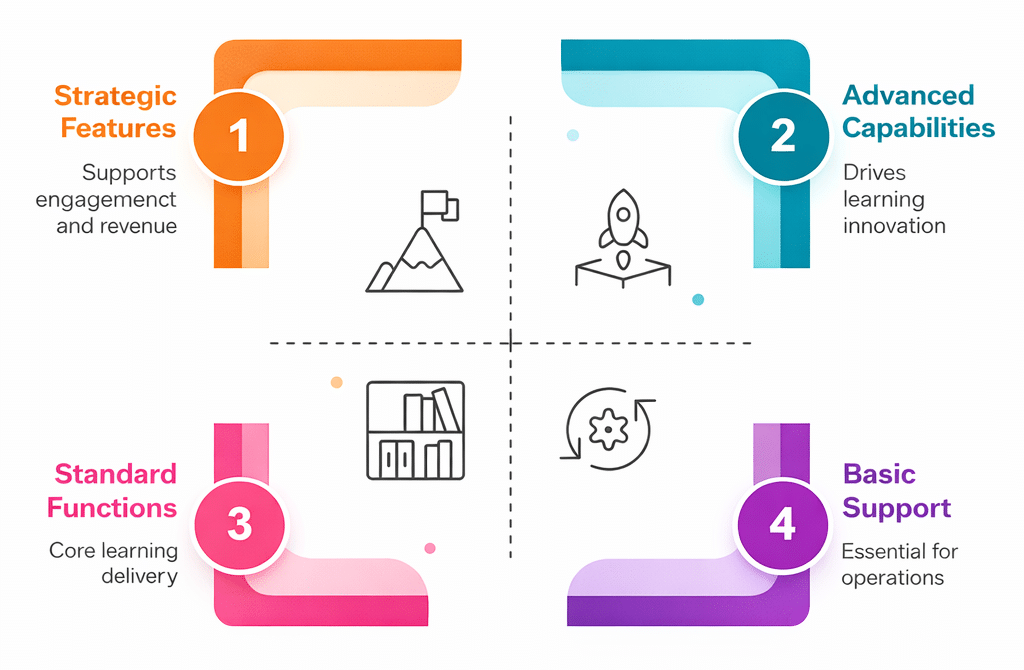
Most LMS platforms provide:
- Course creation and management
- On-demand and live learning delivery
- Assessments and completion tracking
- Learner reporting
What Makes an LMS “Association-Focused”
An LMS designed for associations should also support:
- Member and non-member access rules
- Credentialing and continuing education tracking
- Education e-commerce
- Integration with your AMS, community, and marketing tools
Understanding what defines an association LMS is only the first step. The next challenge is determining whether a specific platform can deliver on those expectations in practice. The following sections outline the key features and capabilities associations should evaluate when comparing LMS options.
Key LMS Features Associations Should Evaluate
As you review LMS platforms, use the following categories as an evaluation framework. These are the areas that most directly impact learner engagement, staff efficiency, and long-term scalability for associations.

Learner Experience
When comparing platforms, look for vendors that offer:
- Intuitive navigation and mobile-friendly design
- Personalized learning paths
- Easy access to certificates and transcripts
Why it matters: A strong learner experience drives higher completion rates, repeat participation, and increased member renewal rates.

Course and Credential Management
When comparing platforms, review whether the LMS can:
- Support for CE credits and certifications
- Automate certificate issuance
- Accommodate flexible prerequisites and learning paths
Why it matters: When you invest in technology, you want to make sure it’s built with features that make your life easier AND that it’s designed to support your organization’s long-term success and growth.

Integrations with Your Existing Tech Stack
Look for LMS platforms that offer:
- Native AMS integration
- Community platform integration
- Automated reminders to complete courses
Why it matters: Learning shouldn’t exist in a silo—it should connect to your online community, job board, marketing software, and larger association tech stack to create a cohesive member experience.

E-commerce and Revenue Tools
When comparing platforms, keep an eye out for functionality that supports:
- Member vs. non-member pricing
- Bundles, discounts, and promotional tools
- Secure payment processing
Why it matters: This expands your organization’s ability to bring in non-dues revenue with your educational programs that extend beyond registration fees.

Reporting and Analytics
Your LMS should empower you to:
- Track learner progress and course completion
- Report on revenue and performance
- Export and share dashboards
Why it matters: Data helps you prove ROI and improve programs over time.

Admin Experience and Ease of Use
Look for LMS platforms that have:
- Intuitive course setup and management
- Role-based permissions
- Tools that reduce manual work
Why it matters: Your LMS should work FOR you and help you personalize the member experience.

Scalability, Security, and Compliance
When comparing platforms, look for:
- Ability to support program growth
- Reliable uptime and vendor support
- Security and data privacy standards
When exploring LMS capabilities that matter most for their use case, many associations may ask whether building an LMS from scratch or buying one is the best fit. In the next section, we outline some pros and cons.
Build vs. Buy vs. Generic LMS
As associations rethink their learning strategy, many reach the same crossroads: Should we build a custom solution? Purchase a generic LMS? Or invest in a platform designed specifically for associations? Each option can work in the right context—but each comes with tradeoffs that affect staff capacity, learner experience, scalability, and long-term value. Understanding these differences is essential before moving into vendor evaluation.
| Building an LMS In-House | Using a Generic or Corporate LMS | Choosing an Association-Focused LMS |
|---|---|---|
| Some associations consider building their own learning platform to maintain full control and customization. However, building an LMS can introduce significant challenges. | Generic LMS platforms may seem like a convenient off-the-shelf option. But associations may encounter limitations. | An LMS built specifically for associations is designed to support education as part of a broader engagement strategy. |
Pros:
|
Pros:
|
Pros:
|
Cons:
|
Cons:
|
Cons:
|
| Conclusion: For most associations, the effort required to build and maintain a custom LMS quickly outweighs the perceived benefits—especially as member expectations and technology standards continue to evolve. | Conclusion: Over time, associations using generic LMS platforms often rely on workarounds or additional tools—adding complexity for staff and friction for learners. | Conclusion: An association-focused LMS aligns with how associations operate—supporting both staff efficiency and learner engagement. Upfront planning and costs may be slightly higher, but this option supports a more sustainable, growth-ready learning program. |
Choosing an LMS is not just about solving today’s challenges—it’s about positioning your association for the future.
As you decide whether to build your own, go with a generic option, or invest in an association-ready LMS, consider:
- How much internal capacity you can realistically dedicate to ongoing platform management
- Whether the LMS supports your full member journey, not just course delivery
- How easily the platform can adapt as learning models, member expectations, and revenue goals evolve
With a clear understanding of the tradeoffs between building, buying, or selecting a generic platform, the next step is evaluating LMS vendors—not just as software providers, but as long-term partners in your learning strategy.
Evaluating LMS Vendor: Choosing the Right Partner
An LMS is not just a piece of software. It’s a long-term partnership. As you evaluate vendors, it’s important to look beyond features and ask strategic questions about the company behind the platform. A strong LMS partner provides more than technology—they provide guidance, best practices, and ongoing support to help your learning strategy succeed.

Key considerations include:
- Is the vendor focused on associations?
- Do they offer structured onboarding and implementation?
- Is ongoing training available for staff?
- What level of customer support is provided?
- Is there a clear product roadmap?
- How does the vendor handle feedback and innovation?

Questions to Ask Every LMS Vendor
- Are association use cases core to your product roadmap?
- What integrations are native vs custom?
- How are certifications and CE credits managed?
- What does onboarding look like in the first 90 days? (Time to launch, training and documentation, ongoing support, etc.)

What to Look for in an LMS Demo
- Realistic association scenarios
- Admin workflows—not just learner views
- Reporting and analytics capabilities
While vendor strategy and support matter, the success of any LMS depends on how learners and staff experience it day to day.
Creating a Great Learner Experience: Engagement Starts Here
First impressions matter.
From browsing a course catalog to downloading a certificate, every interaction shapes how members perceive your association’s value. A poor learning experience can undermine even the best content.
When evaluating LMS platforms, look for ones that deliver:
- Intuitive navigation
- Seamless registration and access
- Personalized learning paths
- Branded environments that reflect your association
- Easy access to certificates and credentials
- Mobile-friendly, accessible design
Learners should feel supported—not confused—at every step.
With Higher Logic Thrive Learn, associations can create learning experiences that feel cohesive, personalized, and aligned with their brand—helping learners stay engaged and come back for more.
CTA: Explore emerging professional development trends shaping online learning.
Community-Powered Learning: Extending Value Beyond the Course
Learning shouldn’t end when a course does. One of the most powerful ways associations can increase the impact of education is by connecting learning to community. When learners can ask questions, share insights, and continue conversations, knowledge becomes more meaningful—and more memorable.
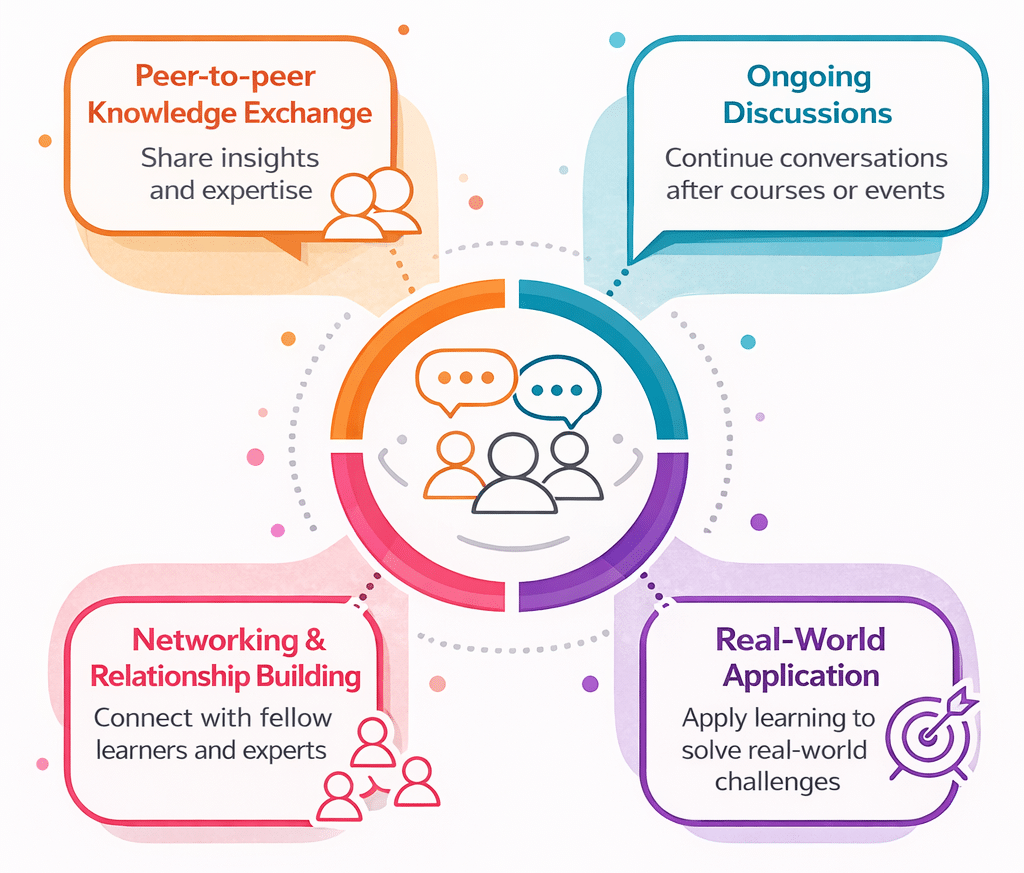
Look for an LMS that supports community powered learning to provide members with opportunities for:
- Peer-to-peer knowledge exchange
- Ongoing discussion after courses or events
- Networking and relationship building
- Application of learning in real-world contexts
By integrating learning with community, associations transform education from a transaction into an experience.
Higher Logic Thrive Learn, when connected with Higher Logic Thrive Community, enables learning and engagement to work together—supporting continuous value long after a course ends.
Learn How Associations Bring Learning and Community Together.The Staff Experience: Efficiency, Scale, and Control
An LMS should empower your staff—not slow them down.
Association teams need tools that are flexible, intuitive, and efficient. With limited time and resources, staff can’t afford platforms that are difficult to manage or require constant workarounds.
A strong LMS should offer:
- Easy content creation and management
- Flexible admin roles and permissions
- Centralized reporting and analytics
- Automation to reduce manual tasks
- Tools that scale with your organization
When staff can work efficiently, they can focus more on strategy, innovation, and member experience. It’s also helpful, as associations scale learning internally, when your LMS can support increasingly complex member and organizational structures.
Extended Membership, Chapters, and Group Learning
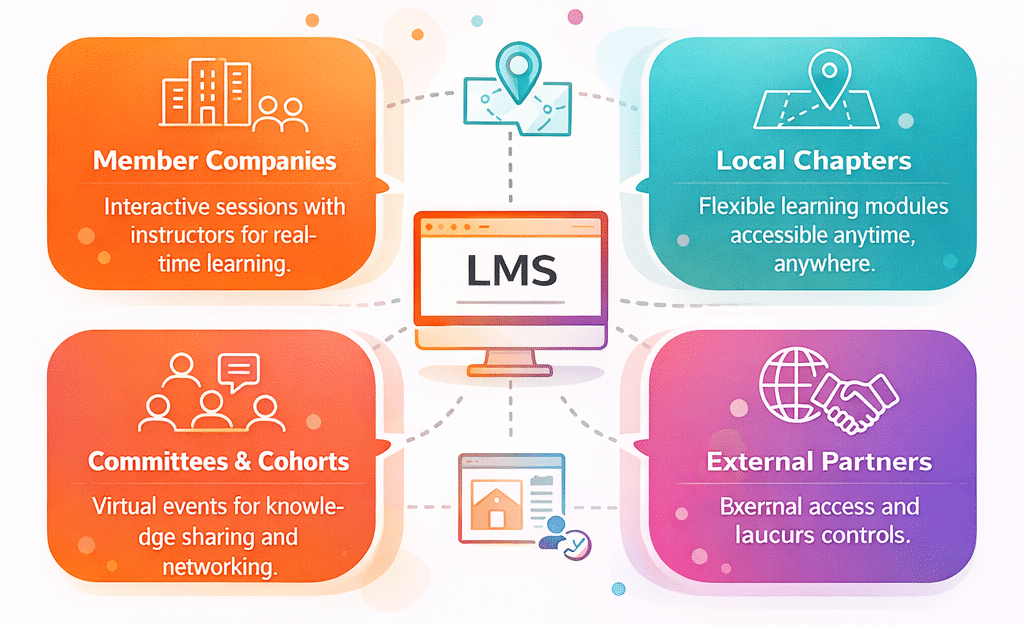
Many associations serve complex member structures that include:
- Member companies
- Chapters or components
- Committees and cohorts
- External learners and partners
Your LMS should support these structures without creating administrative headaches.
Key capabilities include:
- Group-based access and reporting
- Custom landing pages for member organizations or chapters
- Delegated reporting for group managers
- Flexible access controls
Supporting extended membership models allows associations to expand learning reach while maintaining control and consistency.
Platform Requirements That Future-Proof Your Association
Technology decisions should support both today’s needs and tomorrow’s growth, without introducing unnecessary risk or complexity
A future-ready LMS should include:
- Open APIs for seamless integrations
Outcome: Reduce reliance on manual processes and ensure your LMS can adapt as your technology ecosystem evolves - Native connections with AMS, CRM, and community platforms
Outcome: Create a unified member experience while minimizing data silos, reconciliation errors, and administrative overhead. - Strong security and data protection
Outcome: Protect sensitive member and learner data, reduce compliance risk, and maintain trust with members and stakeholders. - Compliance with accessibility standards
Outcome: Ensure equitable access to learning, reduce legal and reputational risk, and meet evolving regulatory requirements. - Mobile responsiveness
Outcome: Support learning wherever members are, increasing participation and reducing friction across devices. - Scalable infrastructure
Outcome: Enable your education programs to grow—without requiring costly replatforming or disruptive system changes.
When learning platforms integrate seamlessly with your broader technology ecosystem, associations reduce operational risk, improve efficiency, and position education as a sustainable, long-term driver of engagement and revenue.
Measuring Success: ROI, Engagement, and Impact
To sustain and grow education programs, associations need clear insight into what’s working.
An effective LMS provides:
- Learner progress tracking: Understand how members move through learning experiences, identify drop-off points, and gain insights to improve course design to increase completion and satisfaction
- Engagement analytics: Measure how learning contributes to overall member engagement and retention, not just participation in individual courses
- Revenue and enrollment reporting: Track the financial performance of education programs, forecast growth, and demonstrate how learning supports non-dues revenue goals.
- Customizable dashboards and exports: Equip staff with the ability to quickly share insights with leadership and boards—without manual reporting or data manipulation.

These insights help associations:
- Continuously improve course offerings based on real learner behavior
- Demonstrate the strategic value of education to leadership and stakeholders
- Justify technology and program investment
- Align learning outcomes with broader organizational goals
When learning data is accessible, accurate, and actionable, education shifts from a perceived cost center to a measurable driver of engagement, revenue, and long-term member value.

Bringing It All Together: Choosing the Right LMS Partner
Selecting an LMS is a strategic decision that impacts nearly every part of your association.
As you evaluate options, look for:
- A vendor that understands associations
- A platform that supports modern learning models
- Technology that integrates with your ecosystem
- Tools that empower both learners and staff
- A long-term partner invested in your success
Avoid solutions that treat learning as an isolated function. The future belongs to connected, flexible, and member-centric platforms.

How Higher Logic Thrive Learn Supports Modern Association Learning
Higher Logic Thrive Learn is designed to meet the unique needs of associations by combining flexible learning tools with seamless integration into the broader engagement ecosystem.
With Higher Logic Thrive Learn, associations can:
- Deliver blended learning experiences
- Support lifelong learning journeys
- Connect education with community
- Scale programs without added complexity
- Measure impact and ROI with confidence
As part of a complete ecosystem, Higher Logic Thrive Learn enables associations to bring learning, engagement, and growth together in one connected strategy.
Next Steps
Choosing the right LMS is an investment in your members, your mission, and your future.
If you’re ready to modernize your learning strategy, explore how Higher Logic Thrive Learn can help you deliver connected, impactful education experiences that drive long-term value.
Download the LMS Board Approval Toolkit |
Request a Demo of Higher Logic Thrive Learn |
|---|